Oil-pressure switch
Oil-pressure switch
The oil-pressure switch is bolted into the oil sump beside the oil filter.
If the oil pressure falls to a level that is too low, the oil-pressure indicator light lights up in the instrument cluster.
Functional description
The oil-pressure indicator light lights up if the oil pressure does not exceed a value defined by a spring. This value lies at approx. 0.2 to 0.5 bar.
When the engine is started, the oil pressure opens the ground contact and the oil-pressure indicator light goes out. The oil-pressure switch is connected to the engine management system across a signal line. The data interchange is digital.
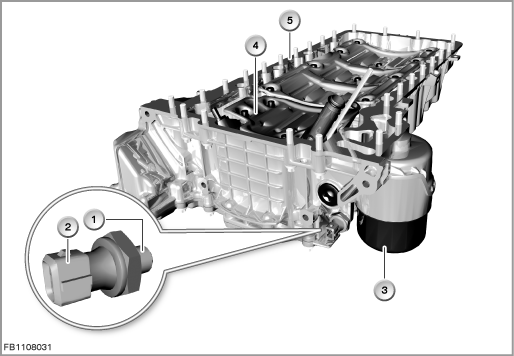
Index |
Explanation |
Index |
Explanation |
|---|---|---|---|
1 |
Oil-pressure switch |
2 |
1-pin plug-in connection |
3 |
Oil filter |
4 |
Oil pump |
5 |
Oil sump |
|
|
Structure and inner circuit
When the oil-pressure switch is not activated, 12 Volts is applied to this signal line to the engine management system. When the switch is activated, 0 Volts is applied.
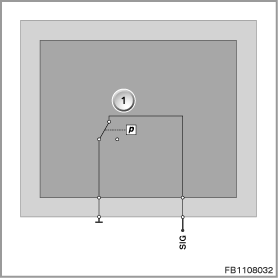
Index |
Explanation |
Index |
Explanation |
|---|---|---|---|
1 |
Oil-pressure switch |
|
|
Pin assignments
Pin |
Explanation |
|---|---|
SIG |
Signal, oil pressure switch |
Target values
Observe the following target values for the oil-pressure switch:
Variable |
Value |
|---|---|
Voltage range |
9 to 16 Volts |
Minimum switching point |
0.2 bar |
Maximum switching point |
0.5 bar |
Operating point |
6 bar |
Temperature range |
-40 °C to 140 °C |
Diagnosis instructions
Failure of the component
If the oil-pressure switch fails, the following behaviour is to be expected:
- Fault memory entry in the engine control module
- The oil-pressure indicator light lights up in the instrument cluster
General information
Diagnosis of the oil-pressure switch runs within 8 seconds after stopping the engine.
No liability can be accepted for printing or other faults. Subject to changes of a technical nature